
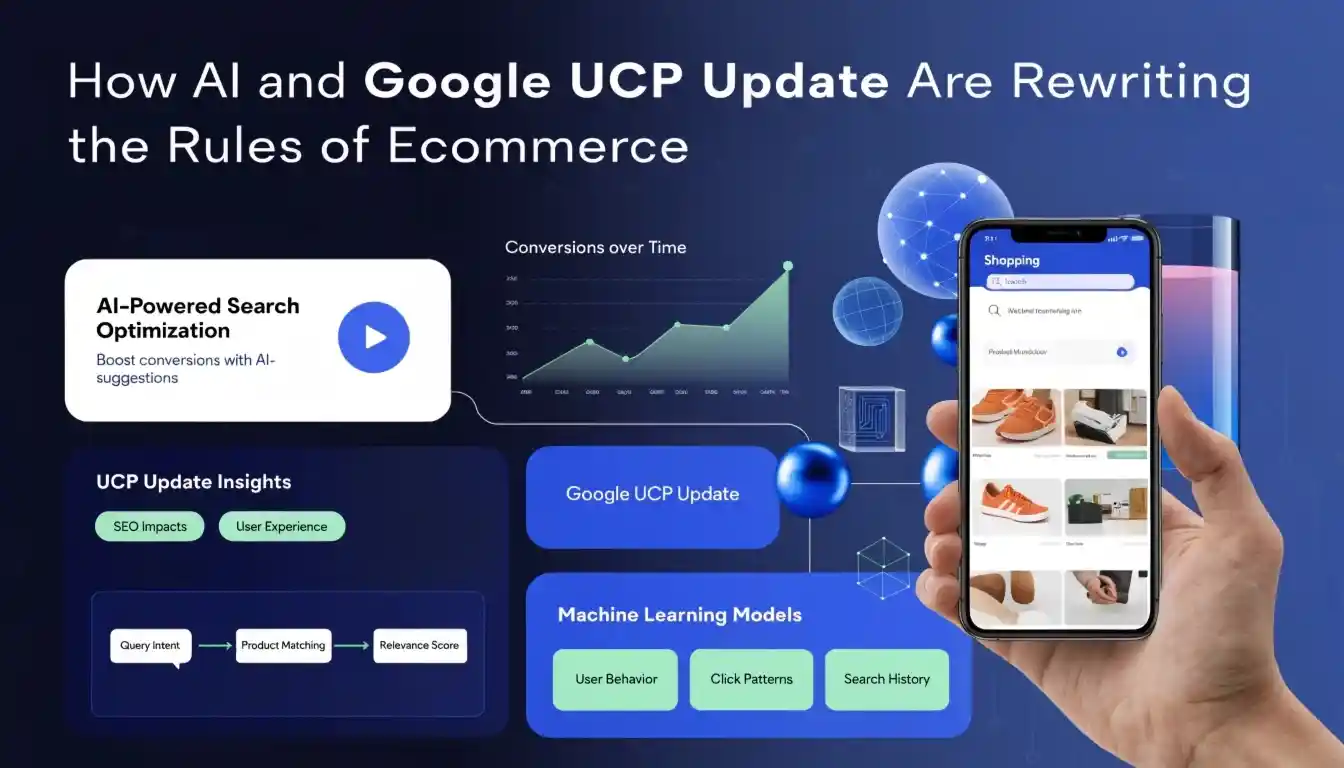
The “shopping experience online” used to be more like a three-step routine before the recent Google UCP Update. You would have that sudden urge for something new, go to the search box, enter some keywords, click on a few blue links, and then after all the clicking and adding to your shopping basket, finally you clicked on “Buy Now.”
However, if you have observed that there seems to be a slight change in how your search results appear, or that your smartphone is acting more like a personal shopping agent rather than a web browser, then you’re not alone because we are witnessing the most transformative architectural change in the history of the internet.
As an expert in Digital marketing and AI search, I’ve watched the “search engine” evolve into an “answer engine.” But now, we’re moving into the era of the “transaction engine.” Between the Google UCP Update, the rise of GEO (Generative Engine Optimization), and the birth of autonomous AI shopping assistants, the gap between “I want this” and “I own this” is shrinking to almost zero.
The Death of the “Search & Click” Era
For twenty years, the internet was a library. You went there to find information. Today, it’s becoming a concierge service.
Old School SEO Services were all about one thing – getting that person to click. We cared about our meta descriptions and title tags because we had to “win the click.” However, come 2026, the person may no longer be the one performing the click action.
AI models like Gemini and ChatGPT are now the “gatekeepers.” They digest the web for us and present a synthesized answer. This transition from Search to AEO (Answer Engine Optimization) means that if your brand doesn’t show up in the AI’s summary, you effectively don’t exist for a large segment of shoppers.
What Exactly is the Google UCP Update?
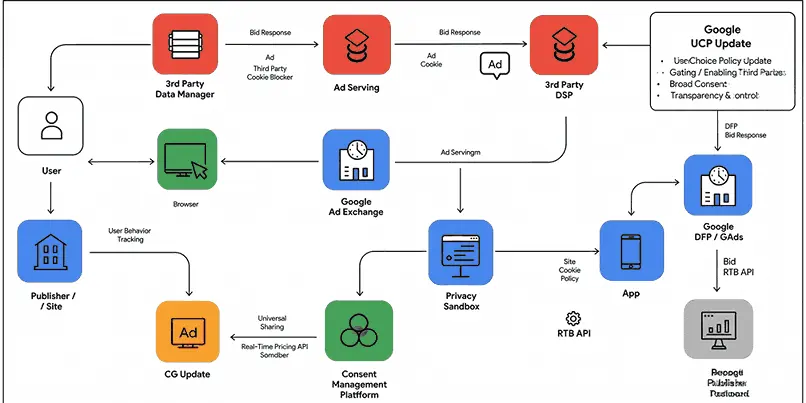
The Google UCP Update is the “hidden engine” making this new world possible. If you’re an ecommerce owner, this is the most important acronym you’ll learn this year.
The Backend vs. The Frontend
Think of UCP as a universal translator between your store’s warehouse and Google’s brain.
- Customer-Side (The Frontend): This is the shiny AI Overview or the shopping assistant you talk to. It knows your preferences, your size, and your budget.
- Inventory-Side (The Backend): This is your product catalog. Traditionally, this data was static. UCP changes that by requiring live, structured, and deep-level data integration.
Google UCP Update goes beyond being merely an algorithmic update since it acts as a protocol which enables the machine to peek inside your “warehouse” in real time. This is what makes an AI system able to declare, “Yes, the blue linen shirt is available in size Medium 2 miles away from here, and I can deliver it by 4 PM.”
Meet Your New Personal Shopper: The AI Agent
Imagine you’re planning a hiking trip. In the old days, you’d search for “best hiking boots,” read five articles, visit three stores, and compare prices.
Now, the journey looks like this:
You: “Hey Gemini, I’m going to the Swiss Alps in June. I need waterproof boots for narrow feet, under $200. Find the best pair and put them in my cart.”
The AI doesn’t just give you a list of links. It:
- Filters for your specific foot shape (based on your past data).
- Compares reviews from Reddit, YouTube, and specialized blogs.
- Verifies live stock via the UCP protocol.
- Executes the “Add to Cart” or even completes the checkout if you’ve given it permission.
This is a seismic shift. The “Search → Website → Purchase” funnel is being replaced by “Ask AI → AI Recommends → Purchase.”
The Amazon Dilemma: Why AI Loves Marketplaces
If you ask an AI for a recommendation today, there’s a high chance it will point you toward Amazon, Walmart, or Target. Why?
It’s a matter of trust and data clarity.
Large marketplaces have spent billions making their data “machine-readable.” Their prices are always live, their return policies are standardized, and they have millions of verified reviews. For an AI agent, recommending Amazon is the “safe” bet. It knows the transaction won’t fail.
Also Read: How FAQs Rich Result Changed SEO, CTR, and Modern SERPs
The Risk for Generic Ecommerce Stores
If you run a generic dropshipping site or a store with “thin” content, you are in the danger zone. If an AI can’t verify your return policy or isn’t sure if your “In Stock” label is actually true, it won’t risk its “reputation” by recommending you.
The Silver Lining: Why Niche Brands Still Win
Does this mean small ecommerce is dead? Absolutely not. In fact, this is the best time in history to be a niche, authoritative brand.
AI thrives on Entity Building. If your brand is known as the absolute expert in “sustainable vegan leather boots,” and you have hundreds of genuine, detailed reviews across the web, the AI will prioritize you for that specific intent.
Authority is the new PageRank. When a human asks for something “high-quality” or “artisan,” the AI looks for “trust signals” that big-box retailers can’t fake.
Shifting Your Strategy: SEO vs. GEO vs. AEO
As an agency providing SEO Services, we’ve had to reinvent our playbook. You can’t just “do SEO” anymore. You have to optimize for three distinct layers:
Comparison: SEO vs. GEO vs. AEO
| Feature | SEO (Search Engine Optimization) | GEO (Generative Engine Optimization) | AEO (Answer Engine Optimization) |
| Primary Goal | Rank #1 on a Google Search page. | Be the “source” cited in an AI Overview. | Provide the immediate, direct answer to a query. |
| User Intent | Browsing / Informational. | Consideration / Synthesis. | Direct Action / Quick Fact. |
| Key Lever | Keywords, Backlinks, Meta Tags. | Authoritative content, Citations, EEAT. | Structured Data (Schema), FAQ format. |
| Success Metric | Click-Through Rate (CTR). | Inclusion Rate in AI responses. | Zero-click “Answer” accuracy. |
How Google Ads Are Evolving
Don’t think for a second that Google is giving up on its ad revenue. Google Ads are being woven directly into the AI conversation.
We are seeing a shift toward “Sponsored Recommendations.” Instead of a sidebar of text ads, the AI might say: “I found two great options for you, and [Brand X] is actually running a 20% discount right now if you buy through this chat.”
For businesses, this means your Google Ads strategy must be more integrated with your product feed than ever before. Performance Max campaigns are becoming the standard because they allow Google’s AI to decide which creative asset (video, image, or text) will convince the AI shopper to recommend your product.
The Technical Blueprint for 2026: Winning the AI’s Trust
If you want to survive the Google UCP Update and thrive in an AI-driven market, you need to stop thinking like a web designer and start thinking like a data architect.
1. Structured Data is No Longer Optional
If your product schema isn’t perfect, you are invisible. The AI needs to see your price, shipping speed, and return policy in a format it can digest (JSON-LD). This is the “language” of the UCP.
2. Live Inventory Integration
If a user asks an AI to buy something and the item is out of stock when the AI goes to the checkout, that AI will likely never recommend your store again. Ensuring your Merchant Centre feed is synced by the minute is critical.
3. “AI Trust” Signals
Traditional rankings used to care about “domain authority.” AI cares about Sentiment. It looks at:
- Review Velocity: Are people talking about you now?
- Third-Party Validation: What are people on Reddit or specialized forums saying about your durability?
- Entity Clarity: Does the internet “know” what you are an expert in?
Key Takeaways for Ecommerce Owners
- The Journey is Nonlinear: People don’t just “search” anymore. They “converse.” Ensure your content answers “How,” “Why,” and “Which is better” questions.
- UCP is the Gateway: Integrate with Google UCP Update allow AI agents to facilitate checkouts.
- Brand is Everything: In a world where AI does the sorting, being a “trusted entity” is your only defense against the scale of Amazon.
- Invest in GEO: Your Digital marketing budget should shift toward creating “citational” content—studies, deep guides, and unique insights that AI models want to quote.
Future of SEO and AI Commerce: A Prediction
Within the next two years, we will see the rise of “Agentic SEO.” This will be the practice of optimizing your website specifically so that autonomous AI agents can “crawl, choose, and buy” without a human ever visiting your homepage.
Your website will essentially have two “front doors”:
- The Visual Door: For the humans who still love to browse and feel the brand vibe.
- The Data Door: A high-speed, API-driven interface specifically for AI agents to pull specifications and execute orders.
FAQ: Navigating the AI Shopping Revolution
Will AI shopping assistants completely replace human browsing?
For “commodity” items (batteries, milk, white t-shirts), yes. For “emotional” or “high-consideration” items (wedding dresses, luxury cars, home decor), humans will still want to browse, but they will use AI to narrow down the top 3 choices.
Is traditional SEO dead?
No, but it has evolved. Think of it as “OEO”—Overall Ecosystem Optimization. You still need a fast site and good keywords, but you now need to be “machine-readable” and “AI-trustworthy” as well.
How does the Google UCP update affect my small Shopify store?
It’s actually an opportunity! If you use the right plugins to sync your data perfectly with Google Merchant Center, UCP allows your small store to compete with giants by letting Google’s AI handle the complex “comparison and checkout” logic for the user.
What is the most important thing I should do today?
Audit your Structured Data. If an AI can’t tell your “shipping cost” or “return window” within 100 milliseconds of scanning your page, you’re losing sales.
Conclusion
The future of ecommerce isn’t about being the loudest voice in the room; it’s about being the most trusted source in the AI’s ear.
As we move deeper into 2026, the brands that thrive will be those that embrace the Google UCP Update and treat their product data as their most valuable marketing asset. The transition from “Search” to “Action” is here. Whether you’re an agency providing SEO Services or a brand-new startup, your goal remains the same: Build a brand that humans love, and data that AI trusts.
The internet is no longer a map of places to go; it’s a network of things to get done. Make sure your brand is the one the AI chooses to get the job done with.