
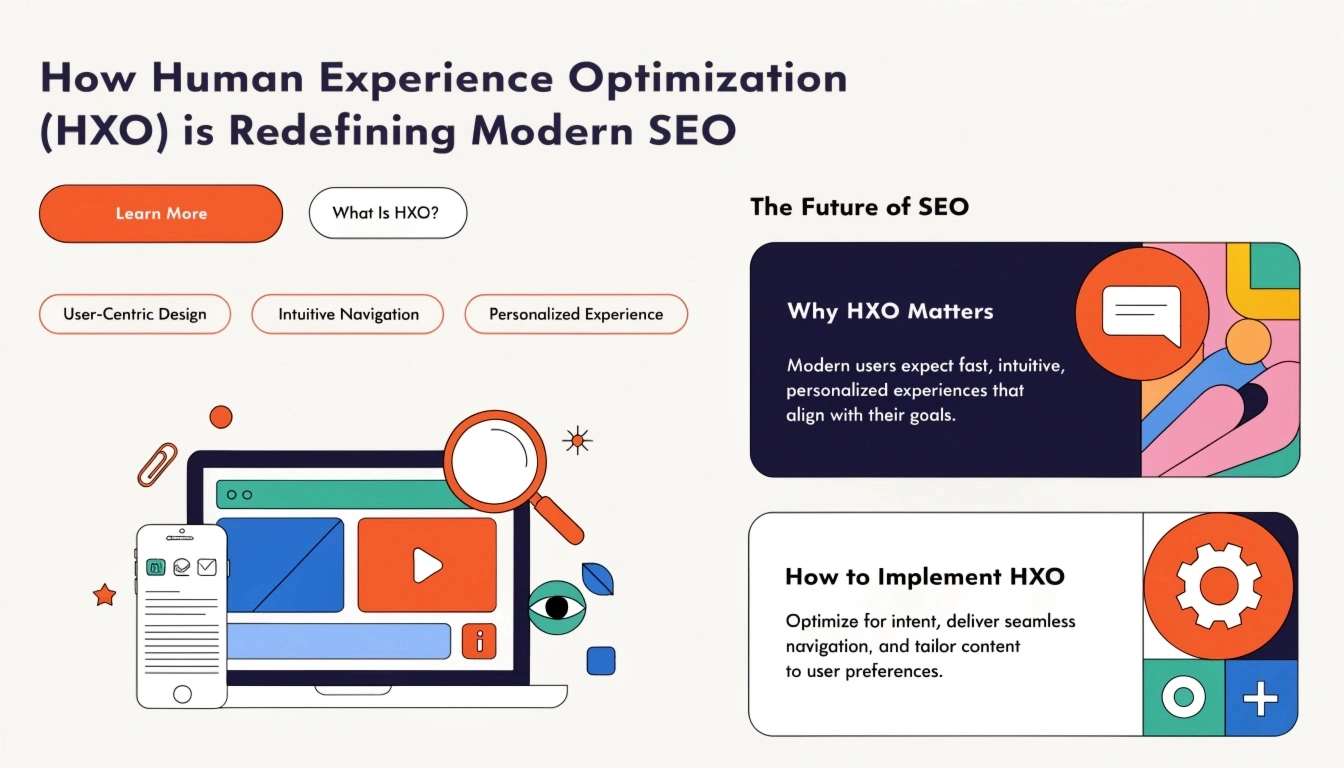
End of Keywording and Start of Human Experience Optimization: The Importance of the Human Experience in Modern Search Engine Optimization. Previously, the process involved simply selecting an appropriate keyword, integrating it into the body of your 1,000-word article, generating some backlinks, and waiting for the traffic to start rolling in.
The rules of the game have changed. If you’re still concerned with nothing more than technical compliance, you’re overlooking the big picture. Google is different now. It’s not simply a search engine but an “answer engine,” where human experience upon landing on your site is highly valued.
We are moving away from traditional SEO and entering the era of Human Experience Optimization (HXO).
Why Search Success is Measured in Trust, Not Just Clicks
SEO used to be all about “tricking” the algorithm. In 2026, SEO is all about pleasing the human.
- SEO Classic: Focused on keyword stuff, meta tags, and link-building. The language was machine-like since it was intended for the crawler.
- HXO (New SEO): Focuses on intent, topical authority, and engagement. What is the question now? Did the user receive what they needed?
SEO Services are not just a technical audit anymore; they involve knowing what the searcher wants.
What exactly is Human Experience Optimization (HXO)?
The technique of HXO involves making sure that your content is relevant to the real-life experiences of your target audience. This is based on the understanding that Google employs metrics such as dwell time, click-through rate, and page stickiness to measure quality content.
Key pillars of HXO include:
- Empathy: Answering the “pain point” before selling the solution.
- Speed & Clarity: Giving the answer fast.
- Trust (E-E-A-T): Showing that you have Experience, Expertise, Authoritativeness, and Trustworthiness.
Why a Bot Can Structure Your Data but Never Your Story
Generic AI writing is everywhere. It’s inexpensive, it’s quick, and, let’s be honest, it’s often bland.
AI does an outstanding job with data organization or helping you get past writer’s block, but there’s no personality. It doesn’t know anything from a first-person standpoint. It can tell you about what a marathon is, but it won’t tell you how your legs felt on mile 22.
The Truth About Google: Google punishes articles created using AI technology not because of the AI creation process, but because of their poor quality. To be successful, use AI to develop the skeleton but your brain to infuse it with flesh.
Why Real Experience Wins Every Time
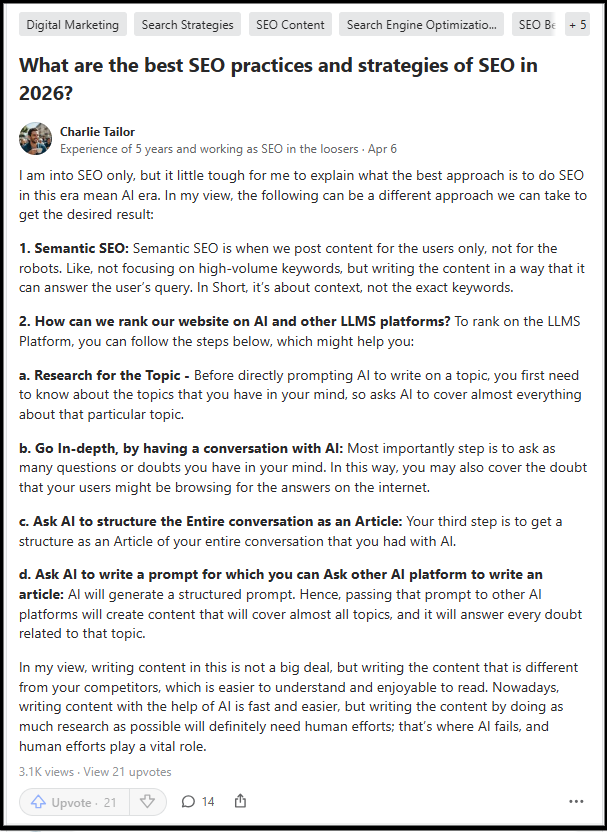
Have you noticed how often Reddit or Quora threads now rank at the top of Google?
It’s because users are craving authenticity. People would rather read a post with a few typos from someone who actually fixed a leaky faucet than a “perfectly written” article by an AI that has never touched a wrench.
Also Read: Choosing the Right Digital Marketing Agency: A Real SEO Journey, Mistakes & What Actually Works
Content Authenticity is the New Currency.
By talking about an error you committed or an insight you gained during a particular client project, you add something a robot can never provide: added value in terms of context. Semantic SEO is all about doing just that.
Clarity Over “Perfect” English
Here is a secret many Digital Marketing agencies won’t tell you: Clear communication beats fancy vocabulary.
For example, on sites such as Reddit, an individual might be explaining a difficult code in bad English but still receive several thousand upvotes. Why? It’s useful!
As for HXO, you are expected to communicate clearly rather than show off your spelling skills. So if your content is clear, relevant, and addresses the problem, you will get rewarded for the engagement it brings.
The HXO Checklist: How to Humanize Your Content
Want to turn a dry, AI-drafted post into a high-ranking HXO masterpiece? Follow these steps:
- [ ] The “So What?” Test: Read your intro. If it doesn’t tell the reader exactly how their life gets better in 10 seconds, rewrite it.
- [ ] Add “I/We” Statements: Share a personal anecdote or a case study result.
- [ ] Kill the Fluff: Delete phrases like “In the rapidly evolving landscape of…” (AI loves these). Get to the point.
- [ ] Use Visual Breaks: Use bold text, bullet points, and short paragraphs. People scan before they read.
- [ ] Address Intent: Does the user want to buy something or learn something? Match your tone to that specific goal.
- [ ] Fact-Check Everything: AI hallucinates. Humans verify.
Practical Strategy for SEO Services
If you are providing SEO Services, stop selling “10 blog posts a month.” Start selling “Audience Authority.”
- Analyze User Behavior: Look at your bounce rates. If people leave fast, your “experience” is broken.
- Optimize for Semantic Search: Don’t just target “SEO tips.” Target the meaning behind it, like “how to recover from a Google update.”
- Encourage Engagement: Ask questions, include polls, or offer a downloadable resource that actually helps.
Conclusion: The Future is Human
The shift to Human Experience Optimization is actually great news for creators. It means you don’t have to obsess over “hacking” the system anymore. Instead, you can focus on being genuinely helpful, sharing your real-world expertise, and building a brand that people actually like.
The takeaway? Write for the person sitting behind the screen. If they love your content, Google eventually will, too.
Frequently Asked Questions (FAQs)
1. Is traditional SEO dead?
Not dead, but it has evolved. Technical SEO (site speed, mobile-friendliness) is now the “minimum entry fee.” HXO is how you actually win the race.
2. Does Google penalize AI content?
No. Google’s guidelines state they reward high-quality content regardless of how it’s produced. However, “spammy,” unedited AI content usually fails to meet their quality and experience standards.
3. What are “Brand Signals” and why do they matter?
Brand signals are things like people searching for your company by name or mentioning you on social media. They tell Google that you are a real, trusted entity in the physical world.
4. How do I improve my “Experience” (the first E in E-E-A-T)?
Use your own pictures, case studies, quotes, or statistics related to your own business practices. Reveal the behind-the-scenes action.
5. Why is my “perfect” content not ranking?
It could be rather vague. There is no justification on the part of Google to elevate your work from Page 2 if there is no different point of view or improvement in the user experience provided by your article.