
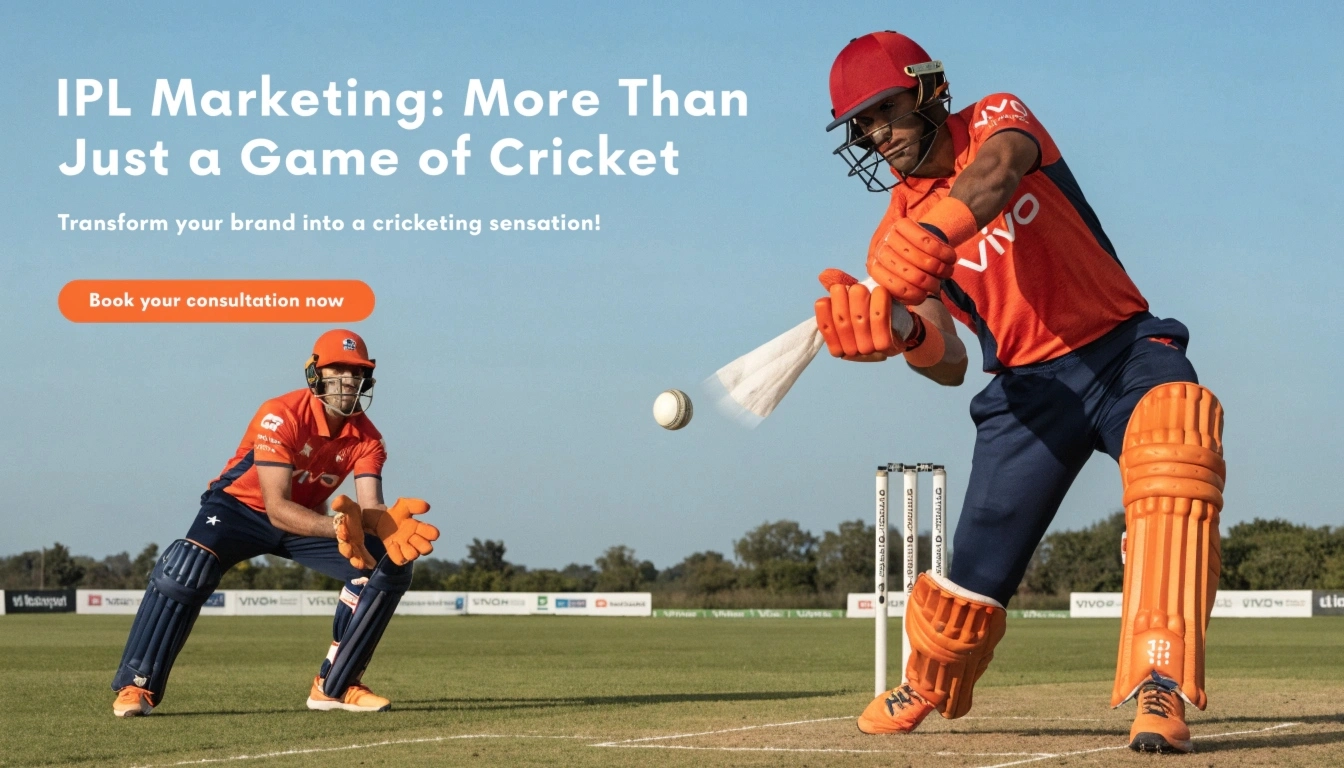
The IPL Circus: It’s Not Just About the Sixes Anymore
In the sweltering heat of the Indian summer, the most significant match isn’t played with a willow bat and a leather ball; it is played in the infinitesimal gaps between deliveries. The Indian Premier League (IPL) marketing has evolved into a $12 billion monolith, a cultural “circus” where the primary product is no longer sport, but human attention. Having surpassed almost every global league in per-match value—trailing only the NFL—the IPL is a high-octane marketing laboratory. It is a digital-first ecosystem where the roar of the crowd is echoed by the ping of a smartphone notification, and the real victory is measured in clicks, conversons, and consumer sentiment.
A Trip Down Memory Lane: From Pads to iPads
To understand the IPL’s current state, one must view its evolution as a technological and sociological progression.
- The Foundation (2008–2012): This was the era of traditional spectacle. It was “TV-first,” characterized by mass-market branding where logos on jerseys were the ultimate prize.
- The Engagement Era (2013–2022): The narrative shifted from passive viewing to active participation. Pepsi and Vivo turned the game into a conversation. The 2017 media rights sale to Star India for $2.55 billion signaled that the IPL was no longer just a tournament; it was the world’s most valuable real estate.
- The Digital Juggernaut (2023–Present): We are currently witnessing the aftermath of the great “divorce” between television and digital rights. With the $6.2 billion split between Disney Star and Viacom18/Jio, the smartphone has become the primary stadium. If an event doesn’t trigger a trending hashtag, it effectively didn’t happen.
- The Puppet Masters: What Marketing Agencies Actually Do Behind the flashing lights stand the architects of the myth—the marketing agencies. Firms like RISE Worldwide and Baseline Ventures are the quiet hands guiding the $300 million Tata title sponsorship deals. They are “sponsorship matchmakers,” but their work goes deeper than contracts.
Through talent management agencies like Cornerstone Sport, players like Virat Kohli and Rohit Sharma are meticulously curated into “individual brands” that exist independently of their on-field performance. These agencies also employ “creative wizards” for moment marketing—turning a spectacular catch or a quirky fan reaction into a meme-based ad campaign within five minutes of the event. Meanwhile, data scientists analyze “second-screen” behavior, ensuring that while you watch the match on TV, your phone suggests the exact snack you’re suddenly craving.
Also Read: What is Integrated Marketing? How is it Helping Modern Brand
The Big Payoff: Why Brands Bet Their Entire Budget on 20 Seconds
The economic rationale for the eye-watering ad rates is grounded in a “value multiplier” effect. With a reach of 700 million people, the IPL bridges the disparate worlds of Mumbai’s luxury high-rises and the quietest rural villages.
- The Memory Game: IPL ads boast a staggering 65% recall rate. In an era of fragmented attention, the IPL provides a rare moment of collective focus.
- Gamification: Through “predict and win” contests, brands bypass traditional skepticism and enter the viewer’s dopamine loop.
- The Sales Boost: The data is undeniable. In 2025, FMCG brands reported an average 5.7% sales uplift, while the “heavy hitters” spending over ₹10 crore saw growth as high as 8.4%.
The Hot Takes: What’s Everyone Crushing on in 2026?
The 2026 season has brought a shift from “blind bets” to “calibrated spending.” Brands are no longer buying visibility; they are buying ROI.
- The Influencer Takeover: We have moved past the one-off celebrity post. Brands now engage in season-long “bromances” between creators and teams.
- The AI Revolution: This year belongs to Artificial Intelligence and Quick Commerce. Google Gemini has integrated into the broadcast, offering real-time insights that blur the line between information and advertisement.
- The Spilled Tea: Controversies and Close Calls Every circus has its dark corners. The ethical landscape of IPL marketing is fraught with “wink-wink” surrogate advertising, where liquor brands promote “club soda” to bypass legal bans. Then there is “ambush marketing”—the parasitic strategy where non-sponsoring brands attempt to hijack the IPL’s aura without paying the entry fee, leading to a perpetual legal chess match.
Perhaps most concerning is the “fatigue factor” and the “gamblification” of the sport. The dominance of real-money gaming and fantasy sports ads targeting younger demographics remains a point of intense sociological debate, questioning the cost of the IPL’s commercial success on the collective psyche of its fans.
The Future: Holograms, Hyper-Ads, and Beyond
The horizon of the IPL is purely technological. We are moving toward “Personalized Ads,” where AI serves you a pizza coupon while your neighbor, watching the same delivery, sees an ad for running shoes based on their recent search history.
The “Metaverse” approach is already surfacing, with AR-powered overlays and VR stadiums aiming to move the fan from “watching” to “inhabiting” the game. Furthermore, as IPL franchises evolve into global conglomerates—owning teams in South Africa and the US—the branding cycle will become year-round and borderless.
Ultimately, teams are moving toward “Direct-to-Fan” monetization, creating exclusive digital clubs to sell merchandise and content directly, slowly rendering the traditional media middleman obsolete. The game, it seems, is only just beginning.